Dream-RSI:拿旧记录当模拟器,在梦里改策略Dream-RSI: dream on old runs to explore better
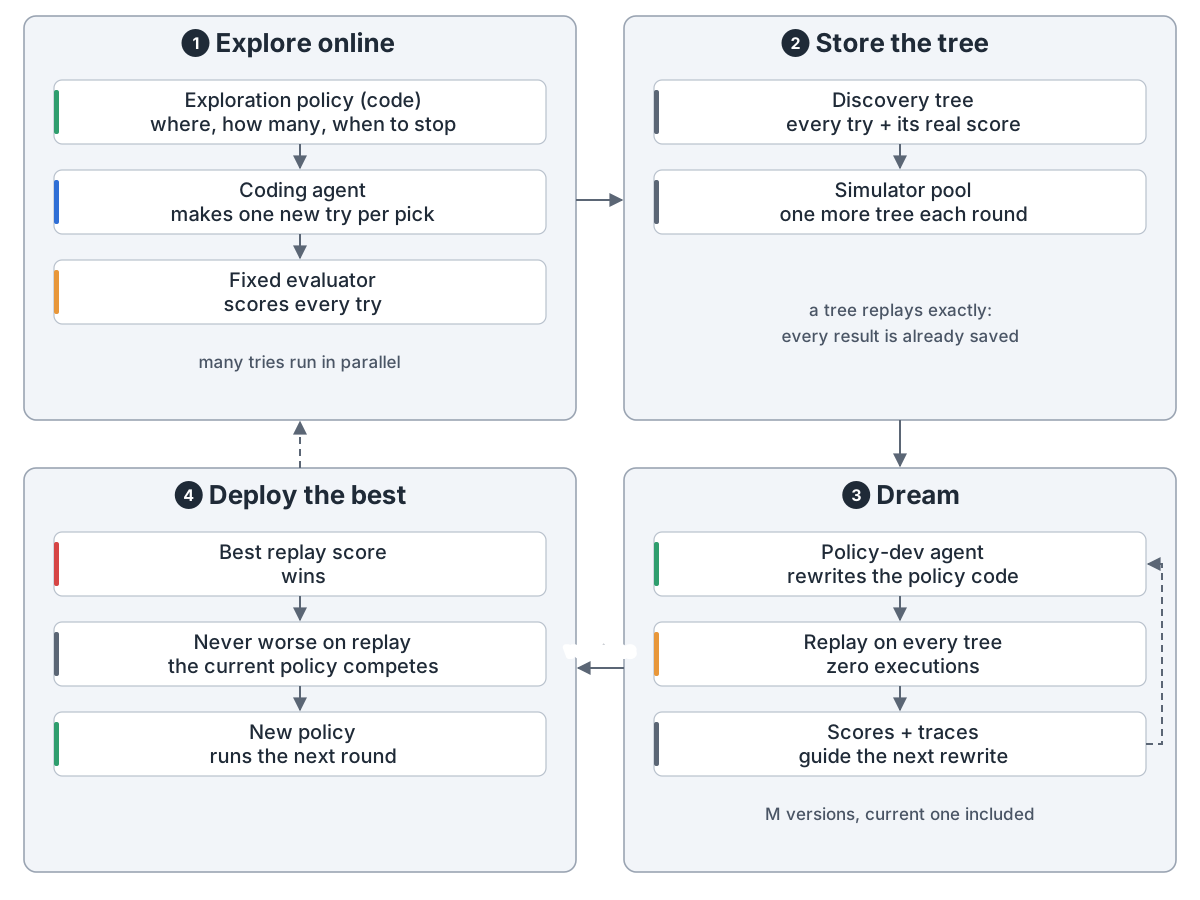
AI 做研究要试很多轮。算力花得值不值,看探索:从哪分叉、几路并行、何时停。这套策略通常写死,想换就得整轮重跑。
Dream-RSI 来自谷歌,想法是:跑完的记录就是模拟器。代码未发布,以下据论文。
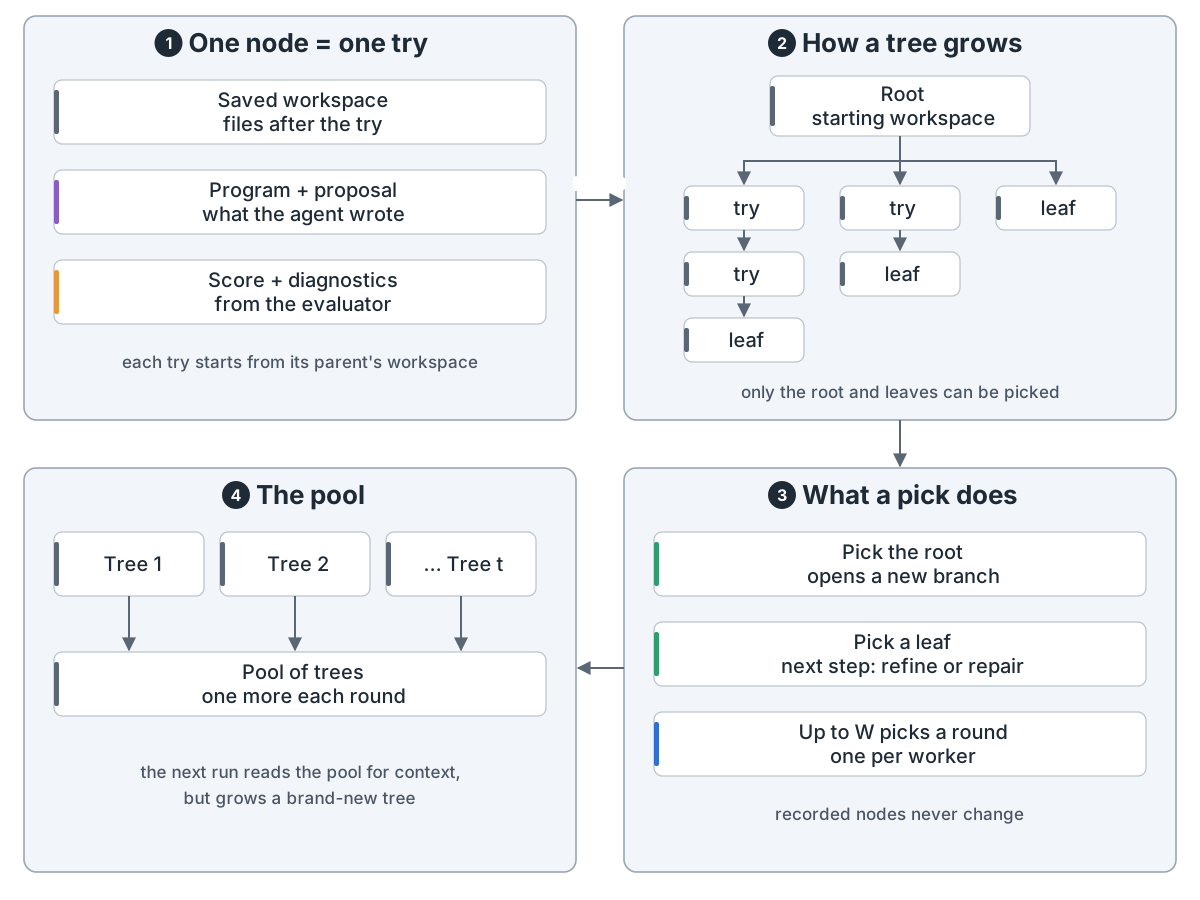
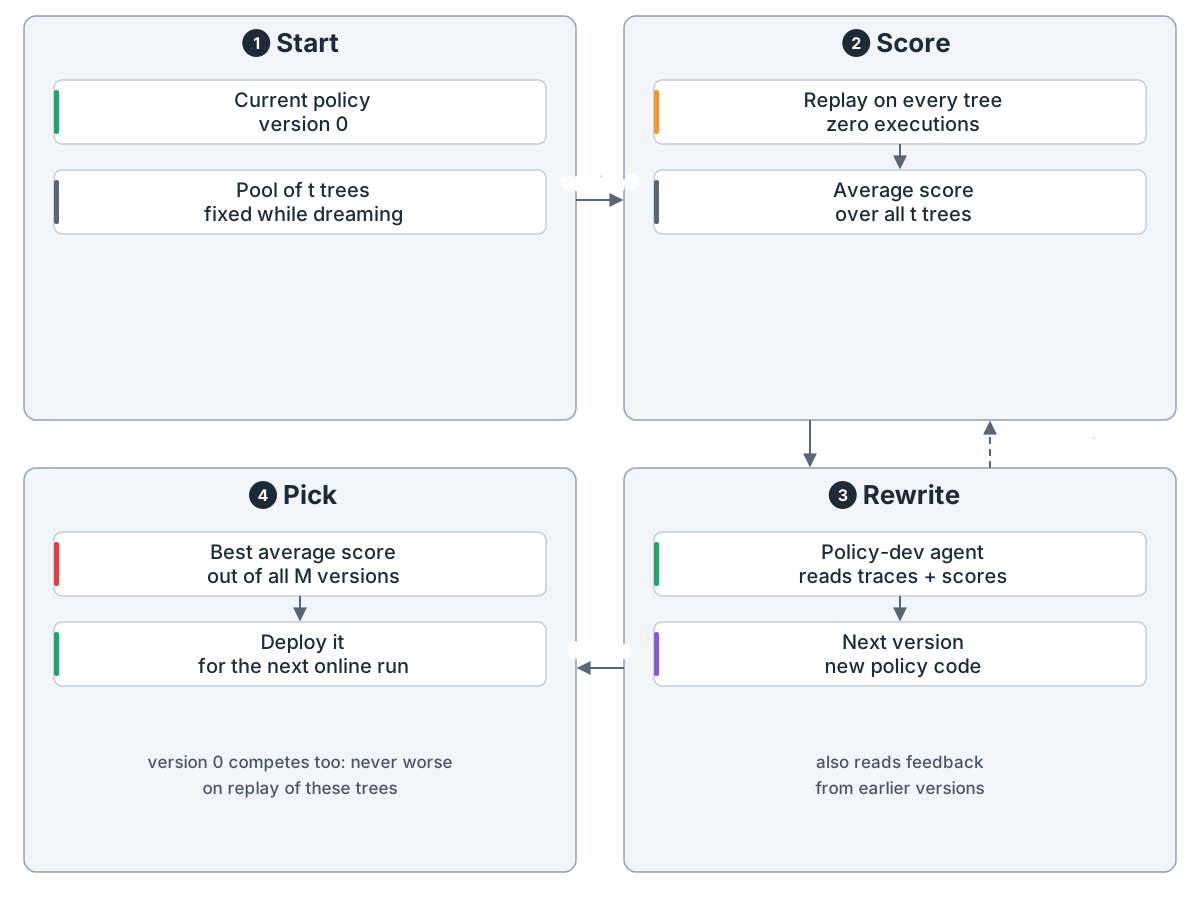
发现树。一个节点是一次尝试:工作区、程序、分数。选根开新分支,选叶子往下走一步。
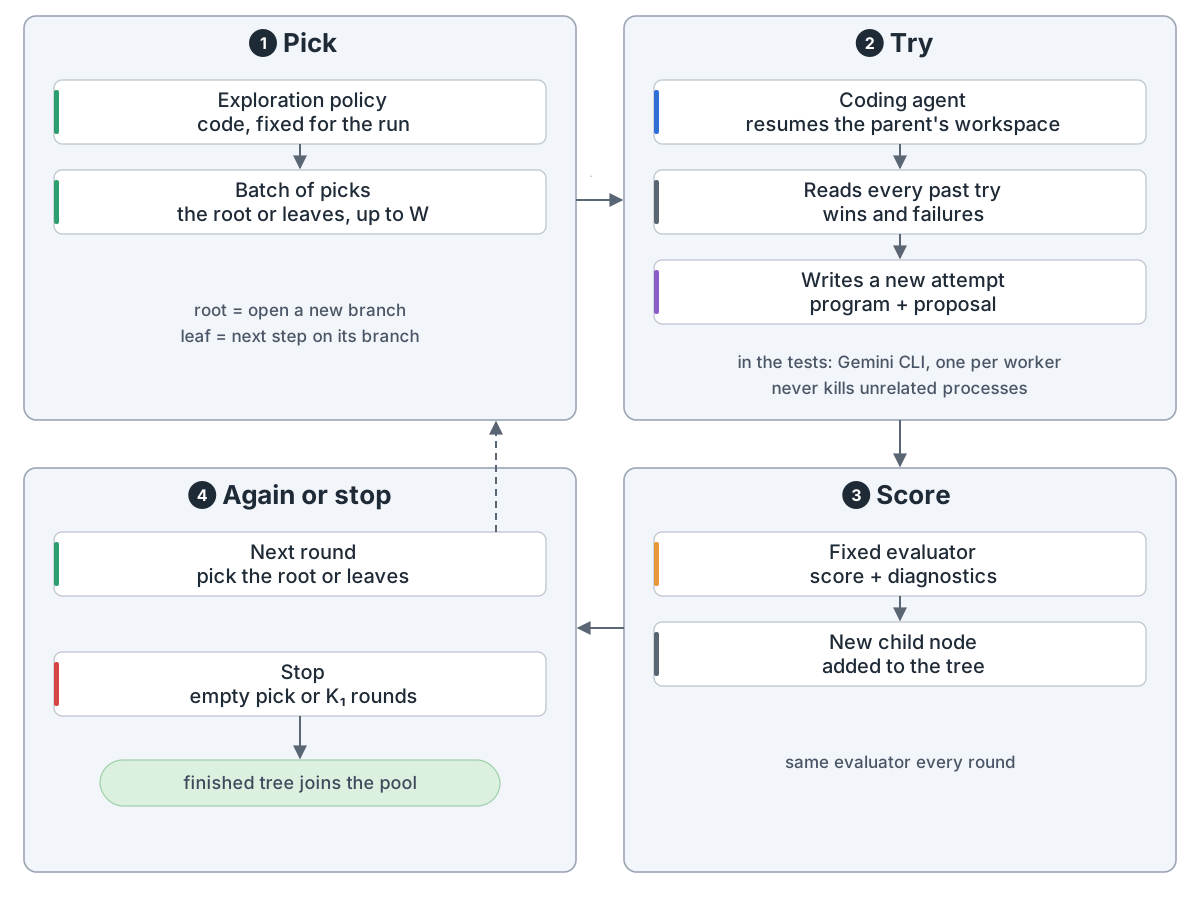
1. 在线探索。策略每轮最多选 W 个节点。编码智能体读完旧尝试再接着做,评估器打分。树进池子。
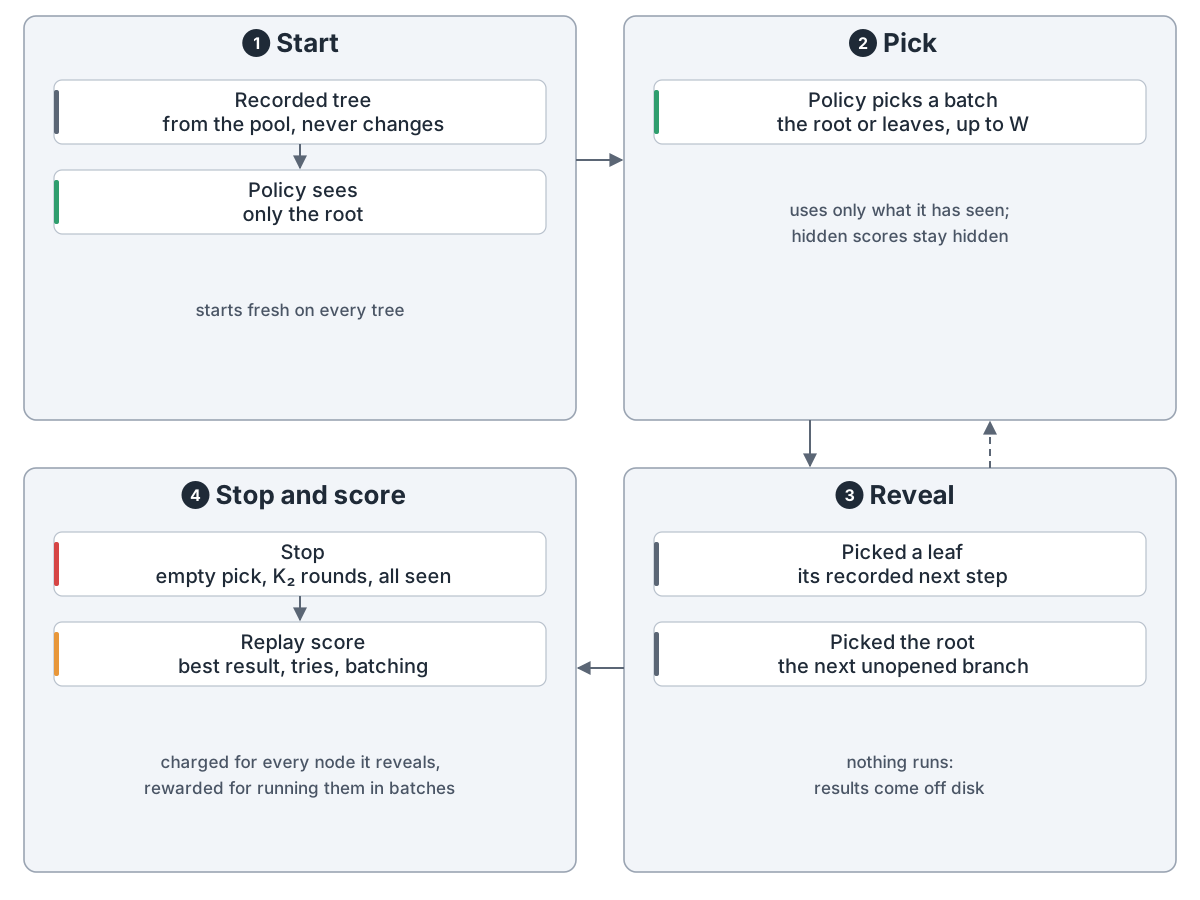
2. 回放。新策略换种走法走旧树,结果现成,不用重跑。分数看最好结果、尝试次数、并行程度。
3. 做梦。另一智能体把策略改 M 版,每版在所有树上回放,分数指导下一版。最高分上线。当前版也参赛,回放分不会变差。
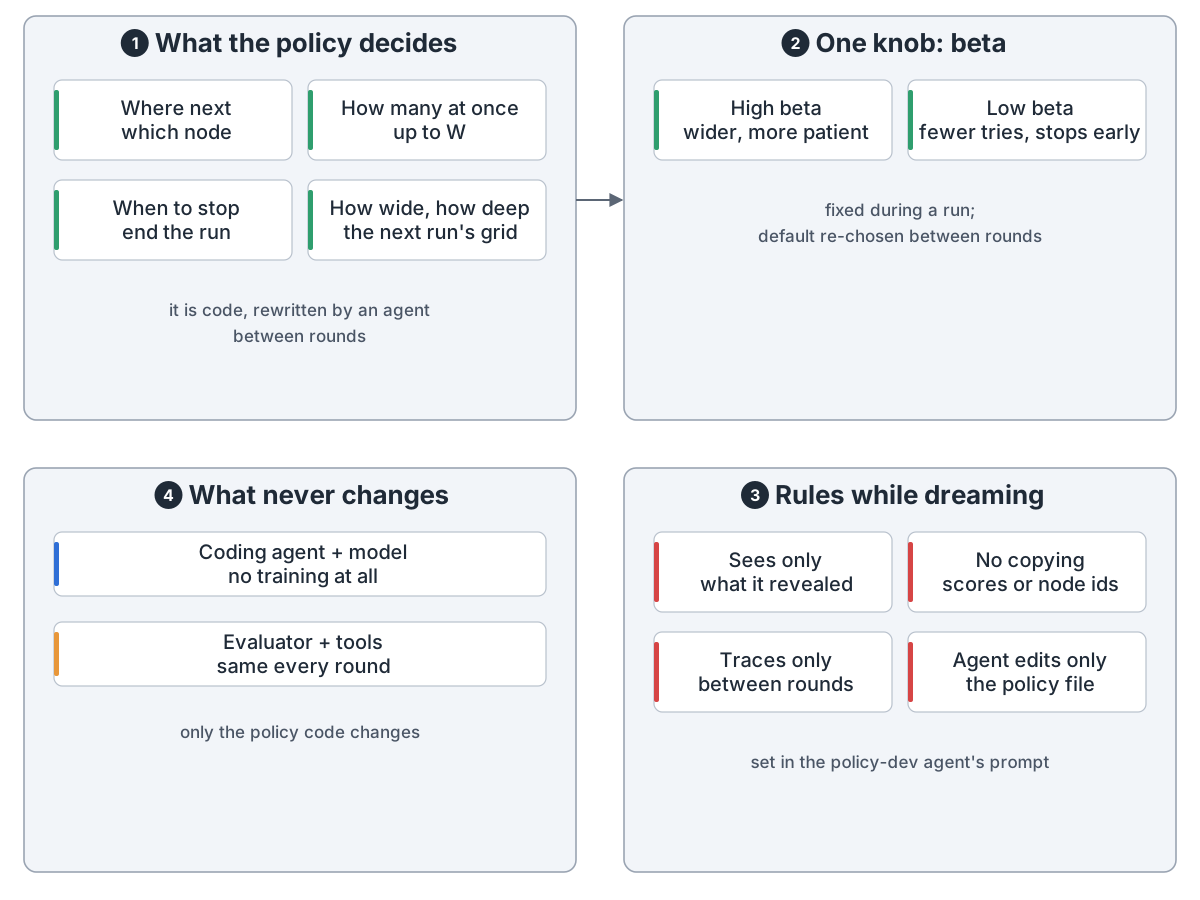
策略是代码,还定下一轮多宽多深。做梦时只看已揭开的部分。模型和评估器不变。
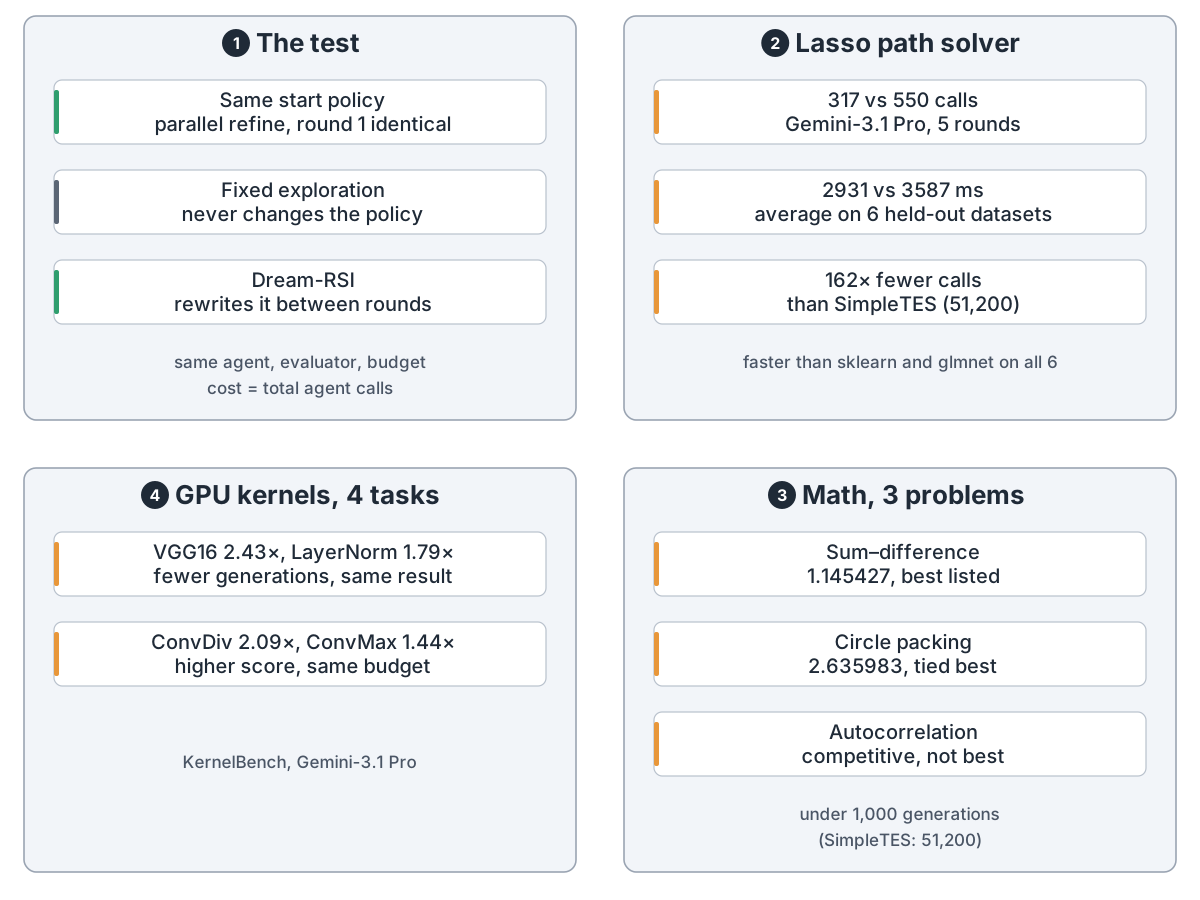
结果。八个任务,对照固定策略。Lasso 上调用少 1.7 倍,比 SimpleTES 少 162 倍。
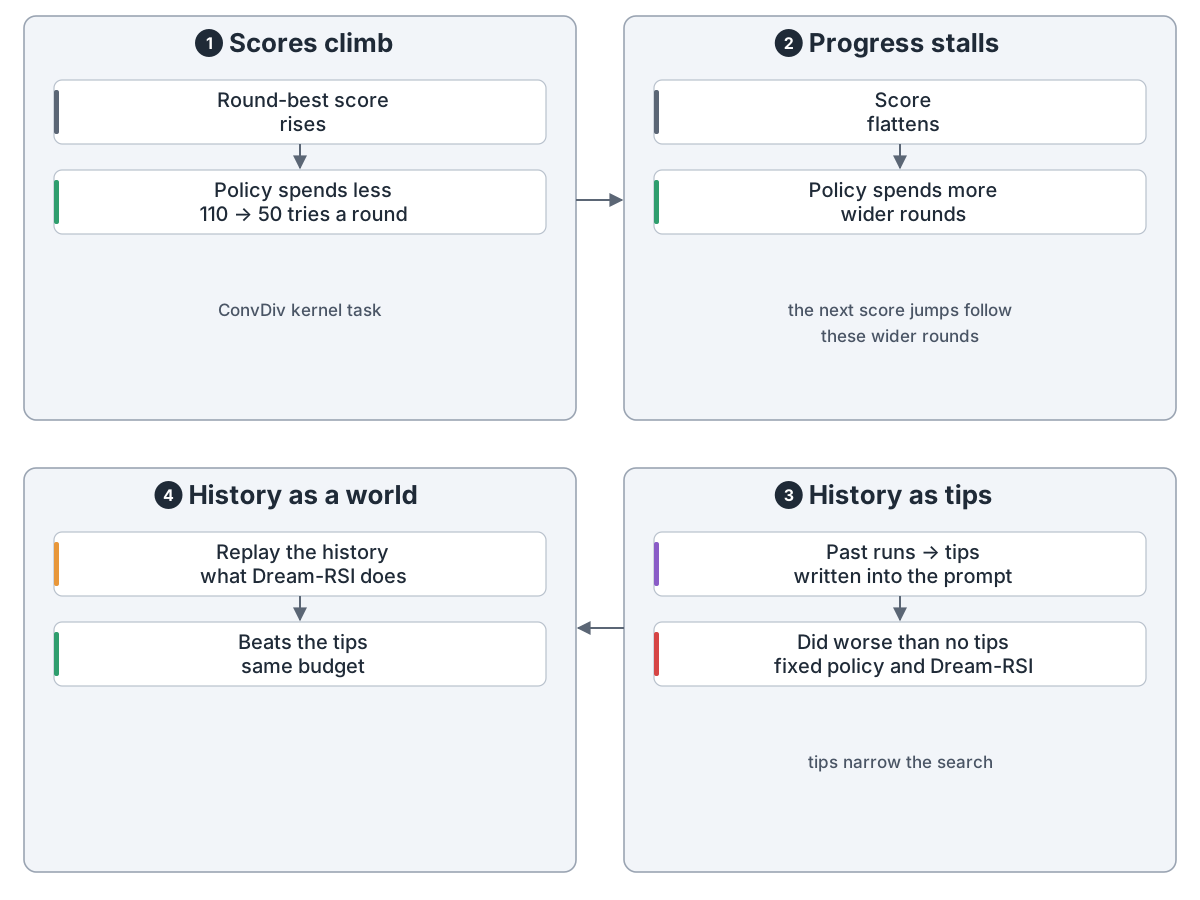
学到的策略涨时省、停时多花。把历史写成提示,不如回放。
AI research runs many rounds of tries. Exploring decides whether that compute pays off: where to branch, how many lines at once, when to stop. That strategy is usually hand-written. Changing it means a whole new run.
Dream-RSI, from Google, has one idea: a finished run is already a simulator. The code isn't out yet; this is from the paper.
The tree. A node is one try: workspace, program, score. Picking the root opens a new branch; picking a leaf takes the next step.
1. Explore online. Each round the policy picks up to W nodes. A coding agent reads the past tries, then continues from each. An evaluator scores it. The tree joins the pool.
2. Replay. A new policy walks an old tree its own way. Results are saved, so nothing reruns. The score counts the best result, the tries spent and how parallel they ran.
3. Dream. Another agent rewrites the policy M times. Each version is replayed on every tree, and its scores guide the next. The top scorer ships. The current one competes too, so the replay score never drops.
The policy is code. It also sets how wide and deep the next run goes. While dreaming it only sees what it has revealed. The model and evaluator never change.
Results. Eight tasks, against a fixed policy. On Lasso: 1.7× fewer calls, and 162× fewer than SimpleTES.
The learned policy saves while scores climb and spends more when they stall. Turning history into prompt tips did worse than replay.
来源Source: dream-rsi.com