ScientistTwo:从想法到论文,自己跑一圈ScientistTwo: idea to paper, all on its own
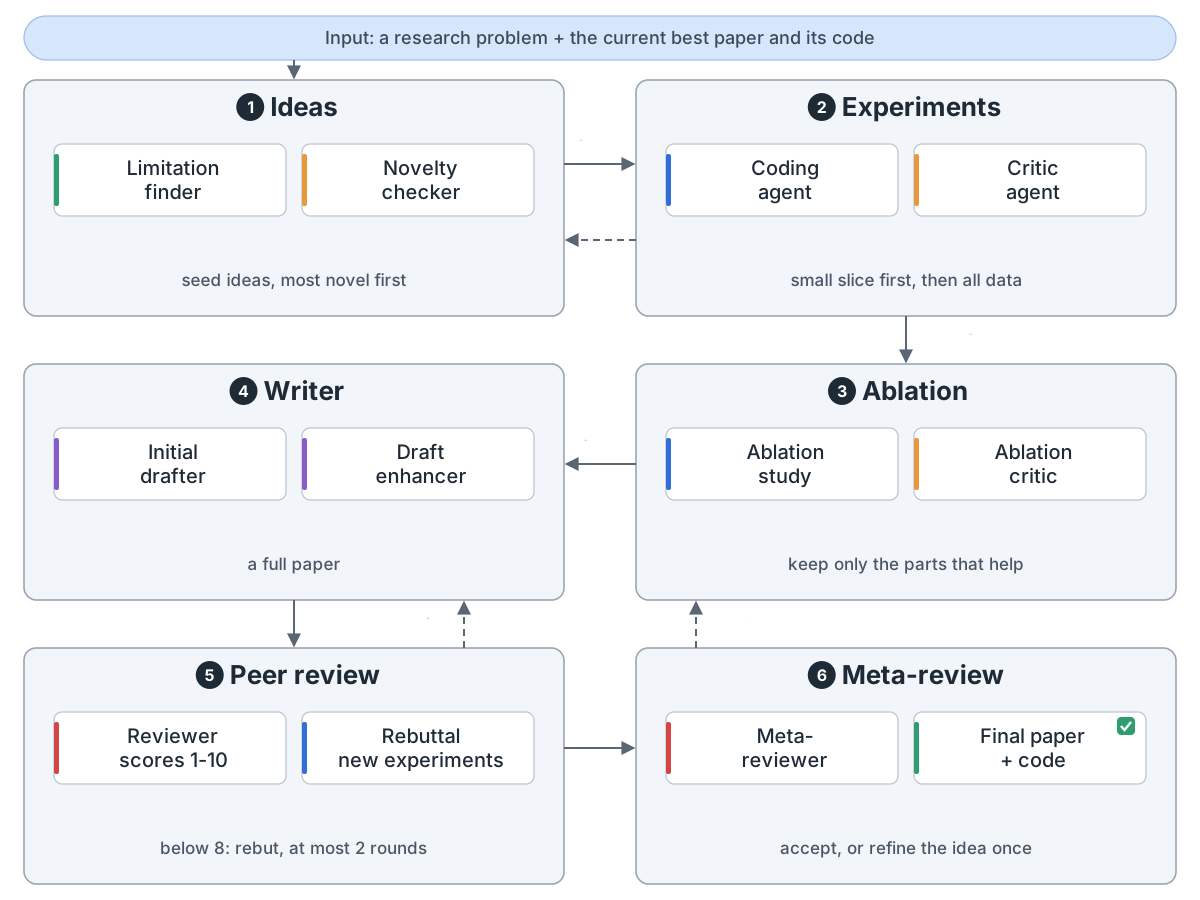
ScientistTwo 是 Google Cloud AI Research 的研究代理。给它一个研究问题,加上当前最好的论文和代码,它自己想点子、做实验、写论文、审论文,不用人管。
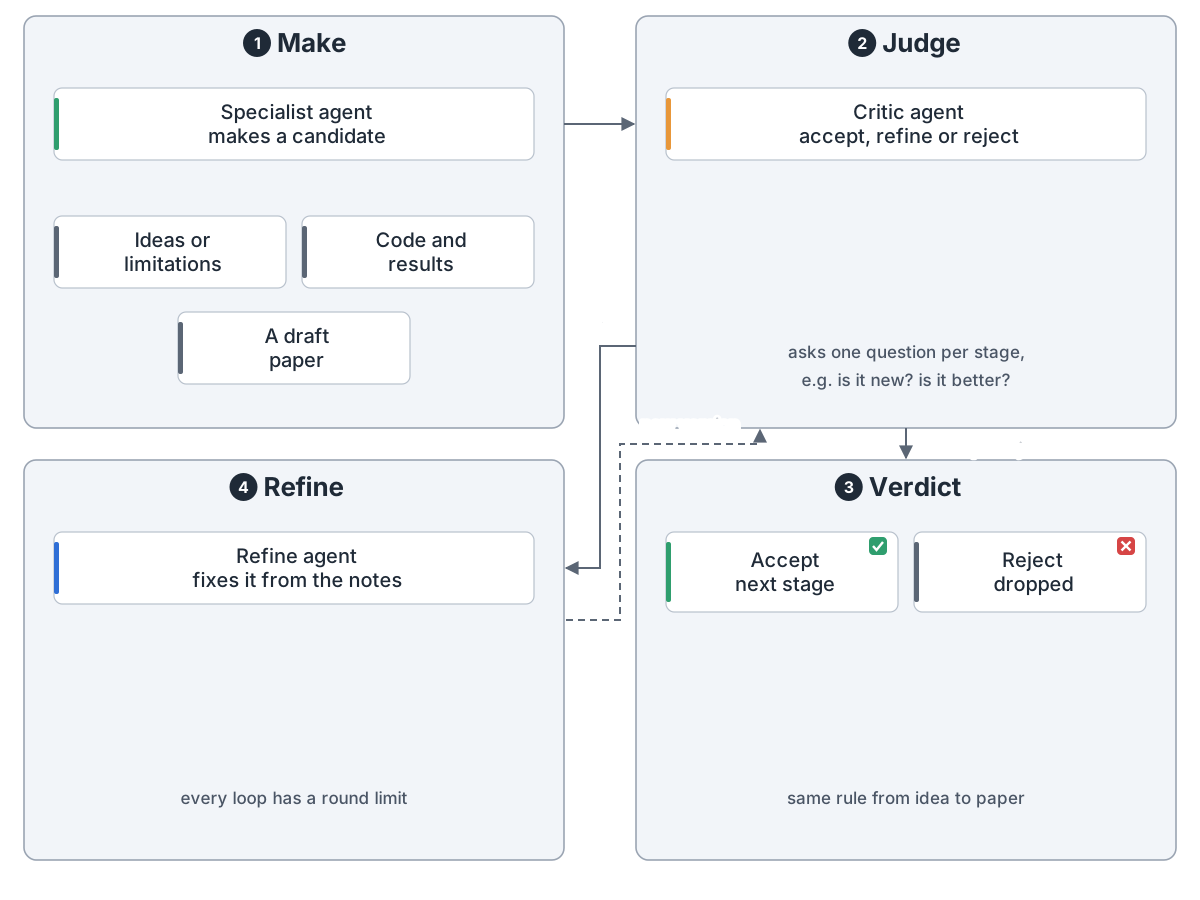
每步都一个套路:一个代理做出东西,评审决定接收、淘汰或打回改。每个循环有轮数上限。
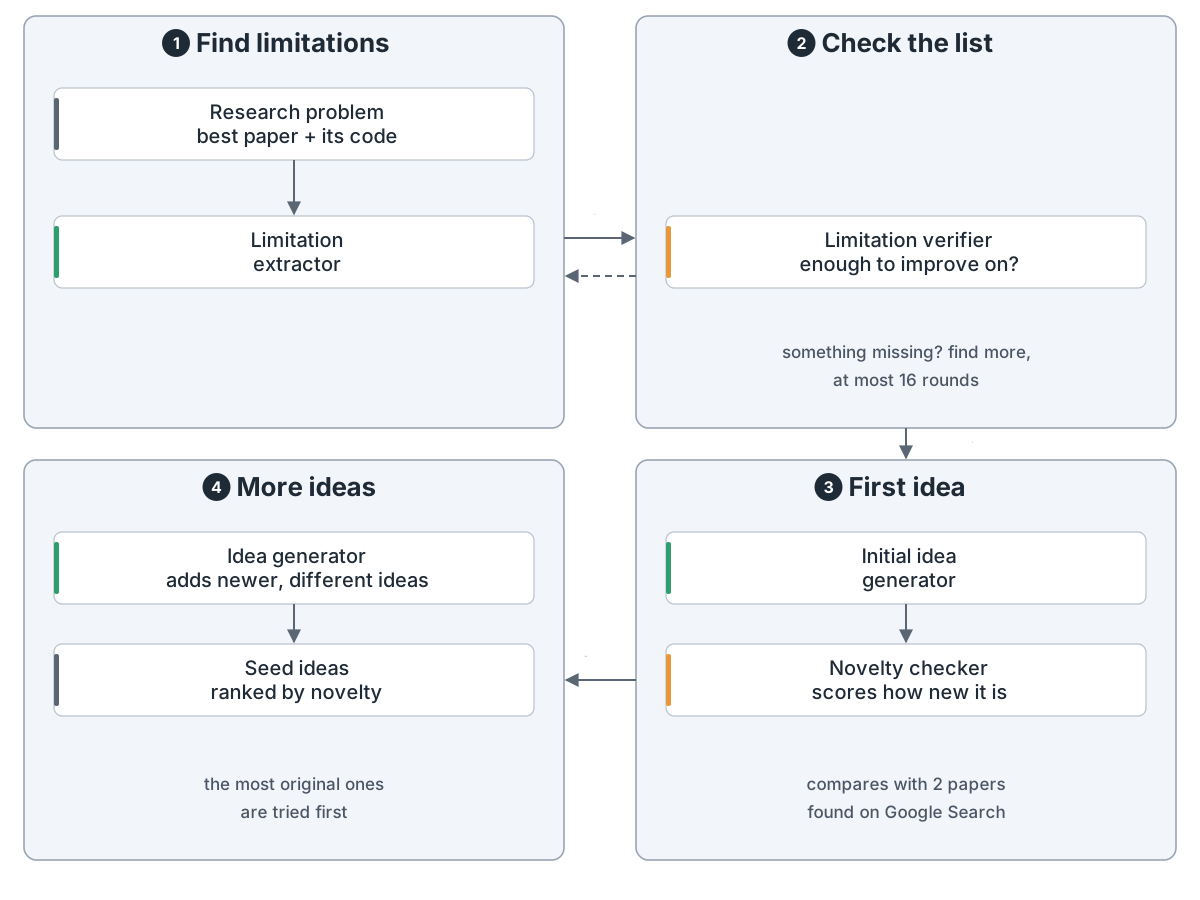
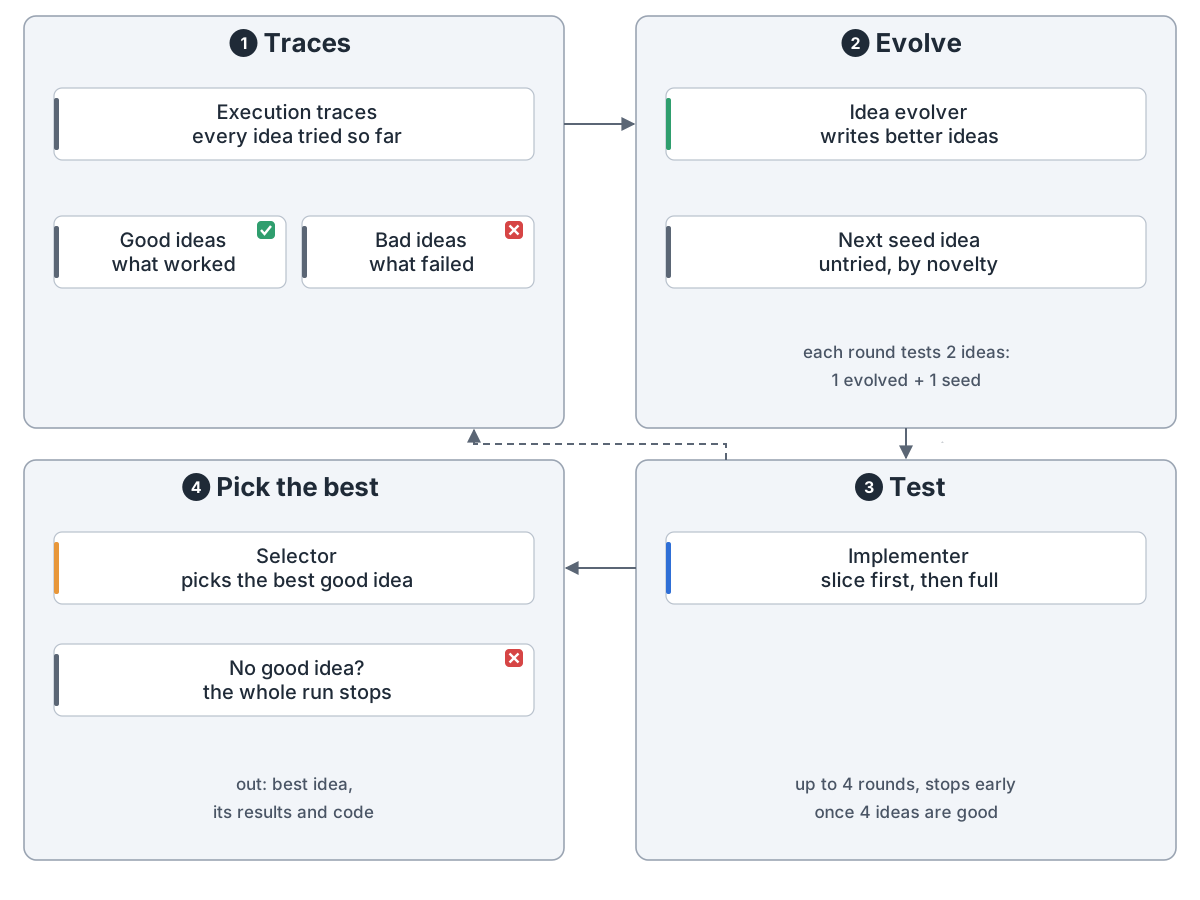
1. 想点子。 列出最好方法的短板,出点子去补,按新颖度排队。
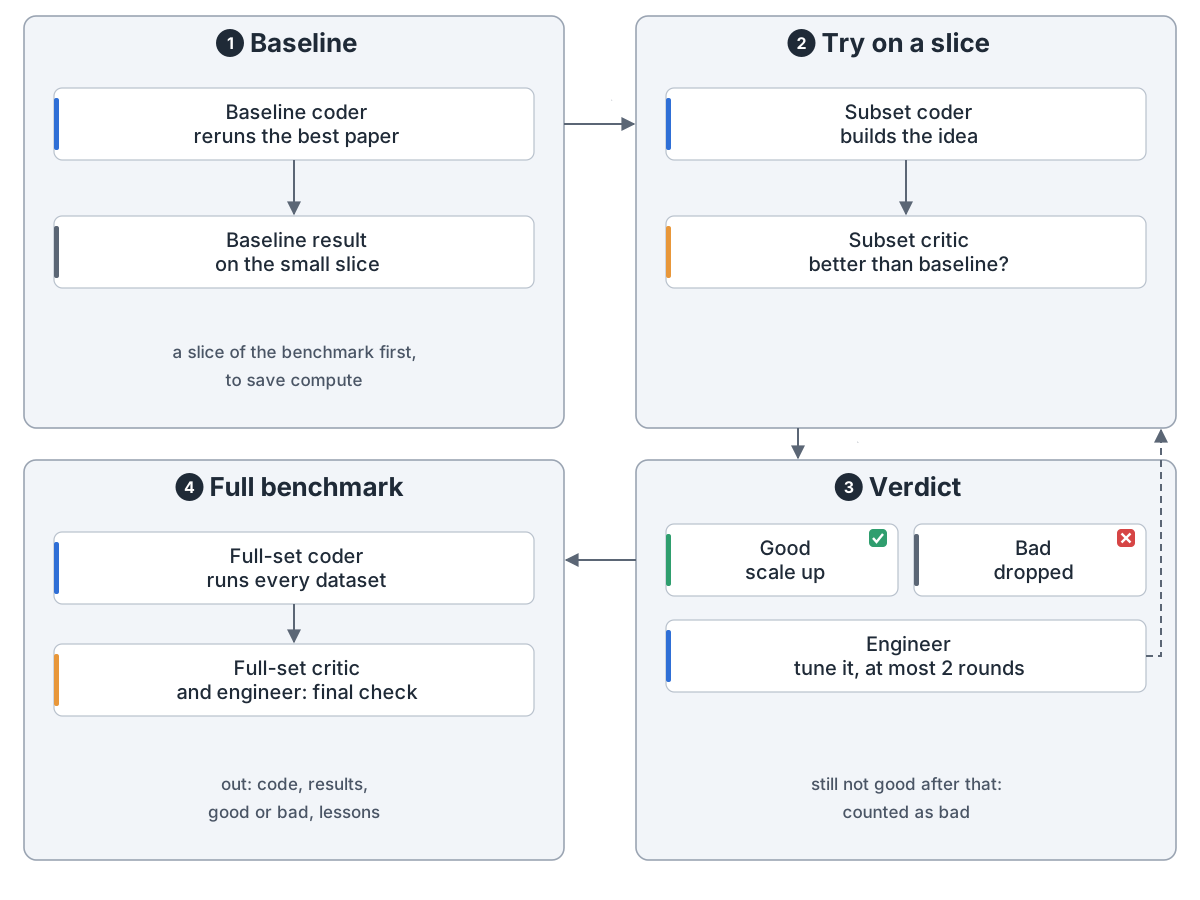
2. 做实验。 点子先在一小部分数据上试,比基线好才跑全量。
结果交给进化器,写出更好的点子,再由选择器挑最好的。
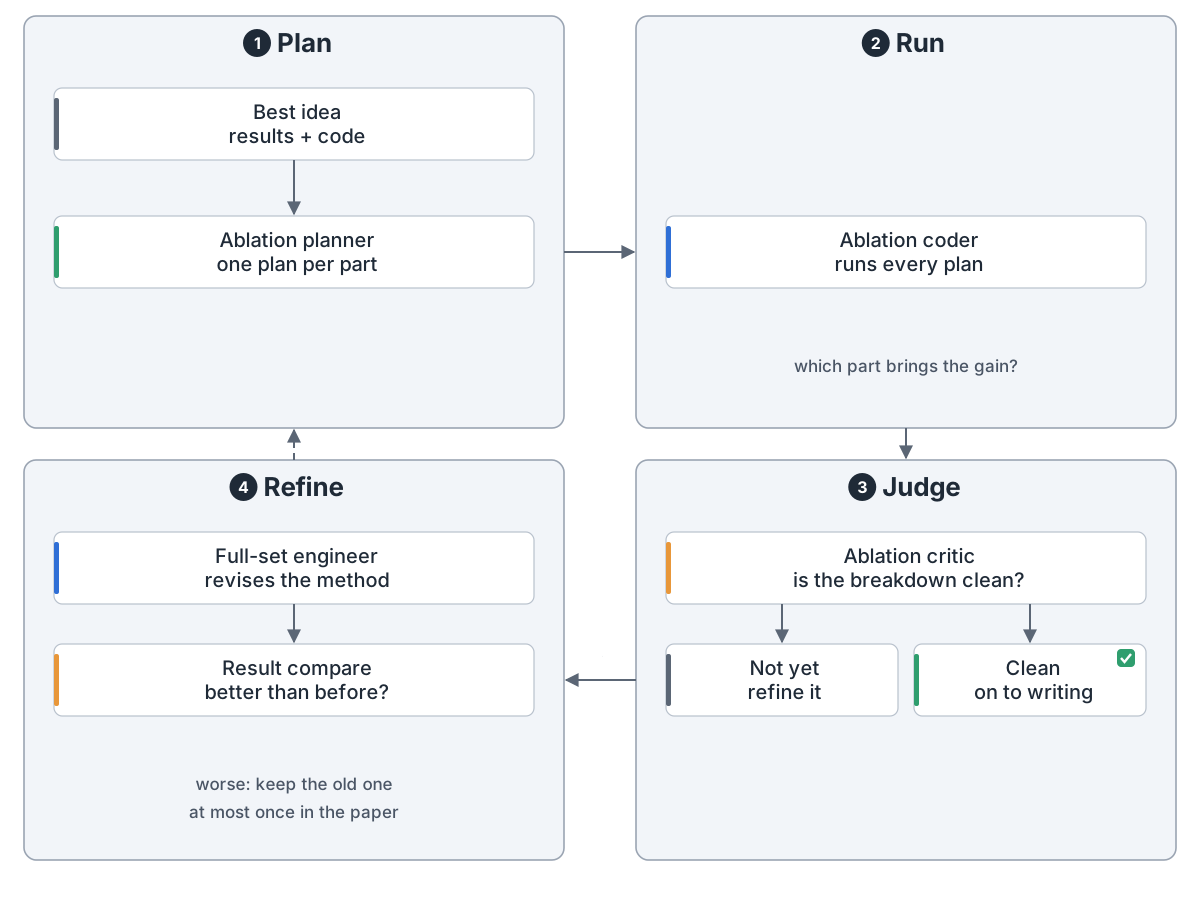
3. 消融。 一次拿掉一部分,看哪部分有用,必要时改一次方法。
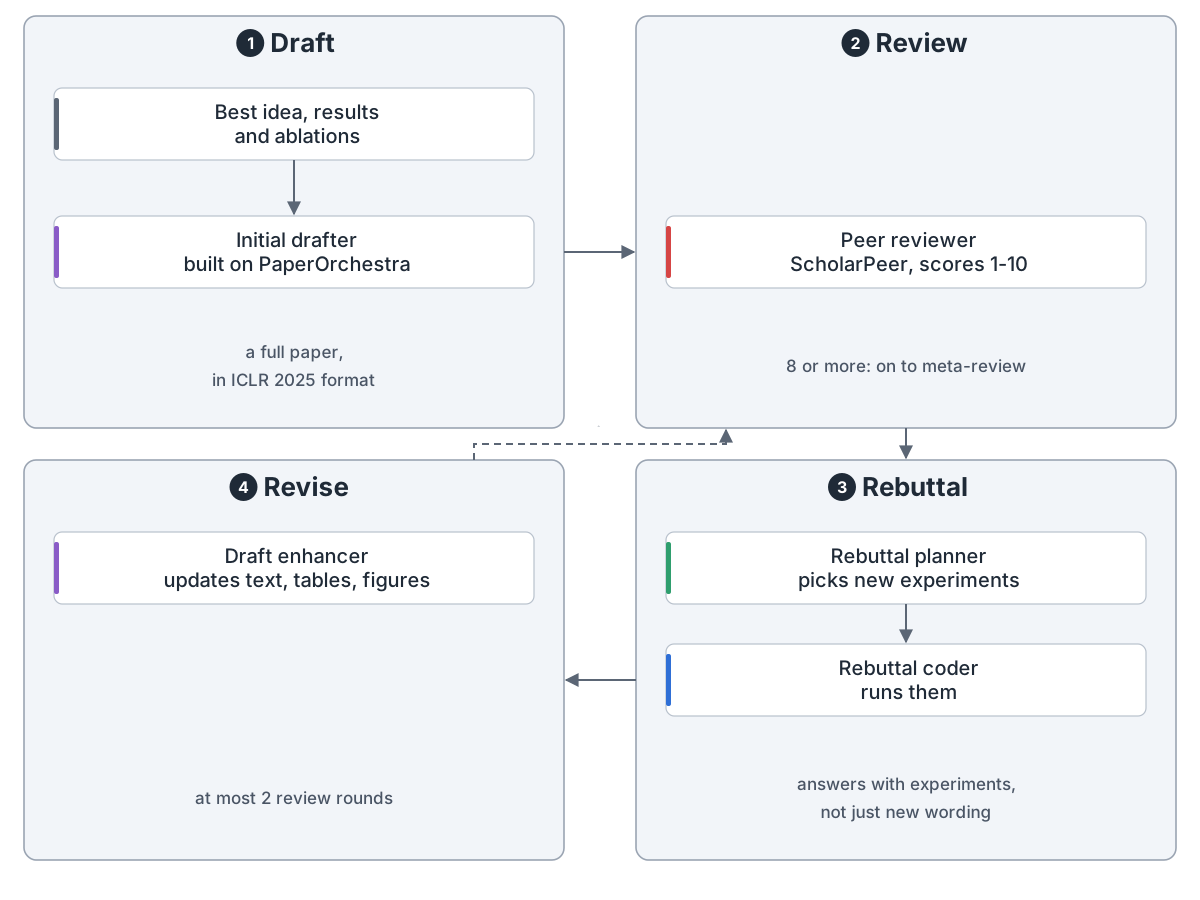
4–5. 写和审。 AI 审稿人打分,低于 8 分(满分 10)就补实验、改论文。
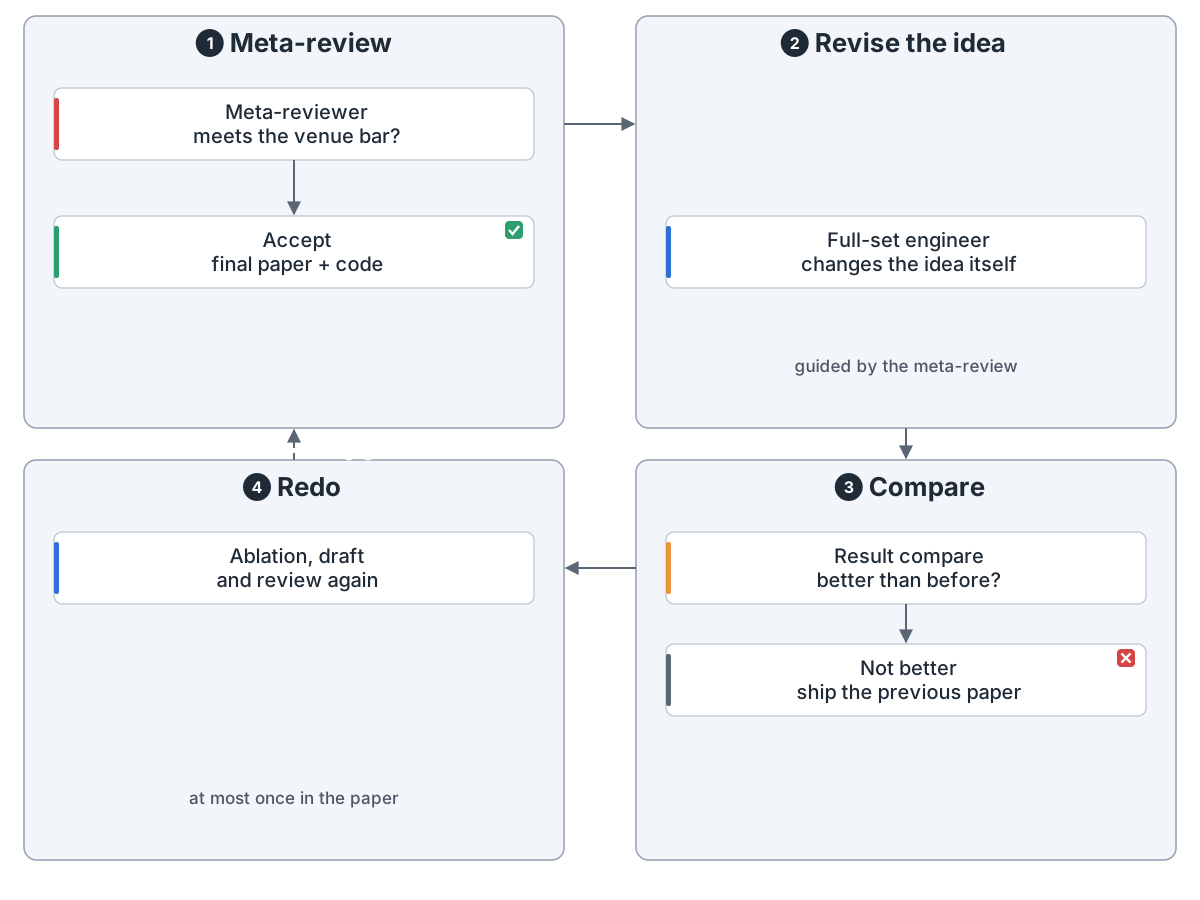
6. 元评审。 最后一关:接收,或打回再改一次。改完不更好,就交上一版。
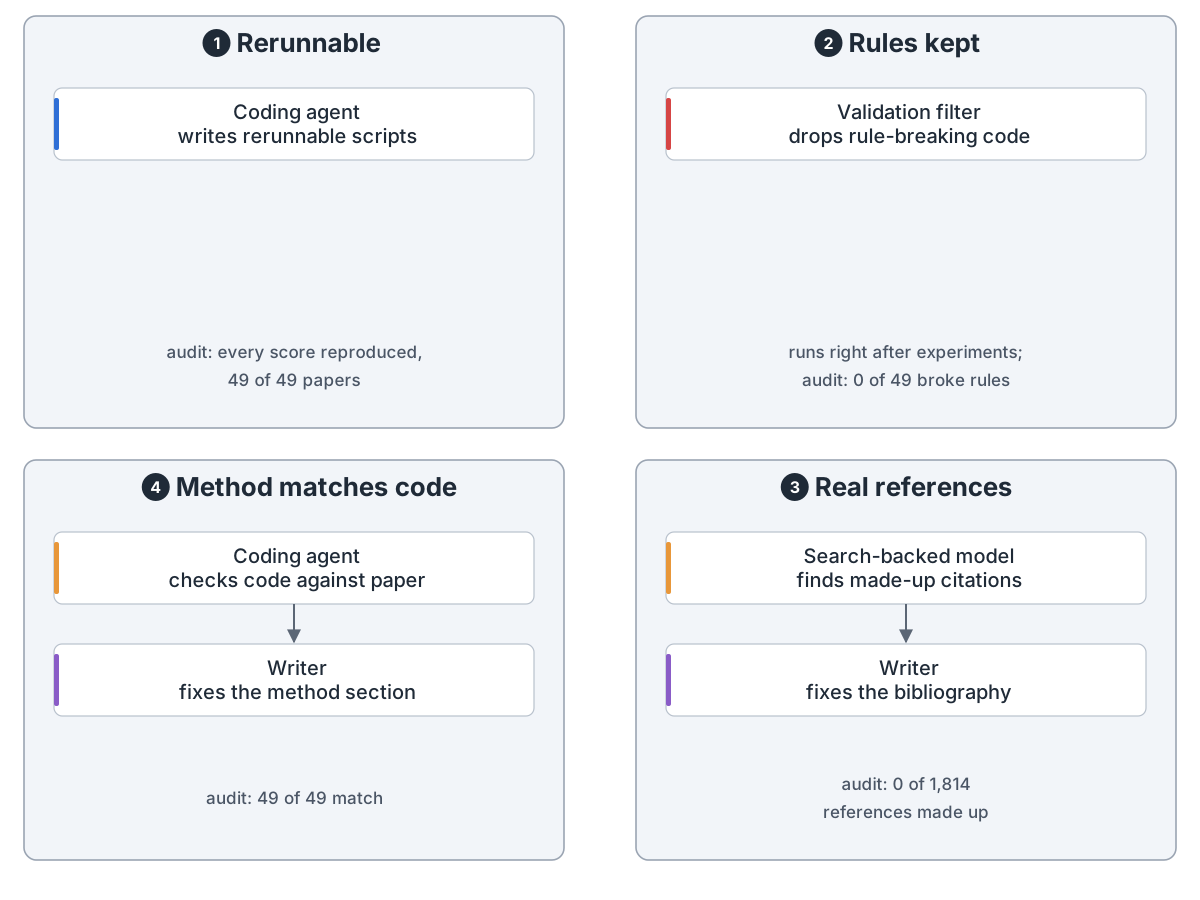
四项检查保证诚信:代码能重跑,违规代码筛掉,引用是真的,方法和代码对得上。
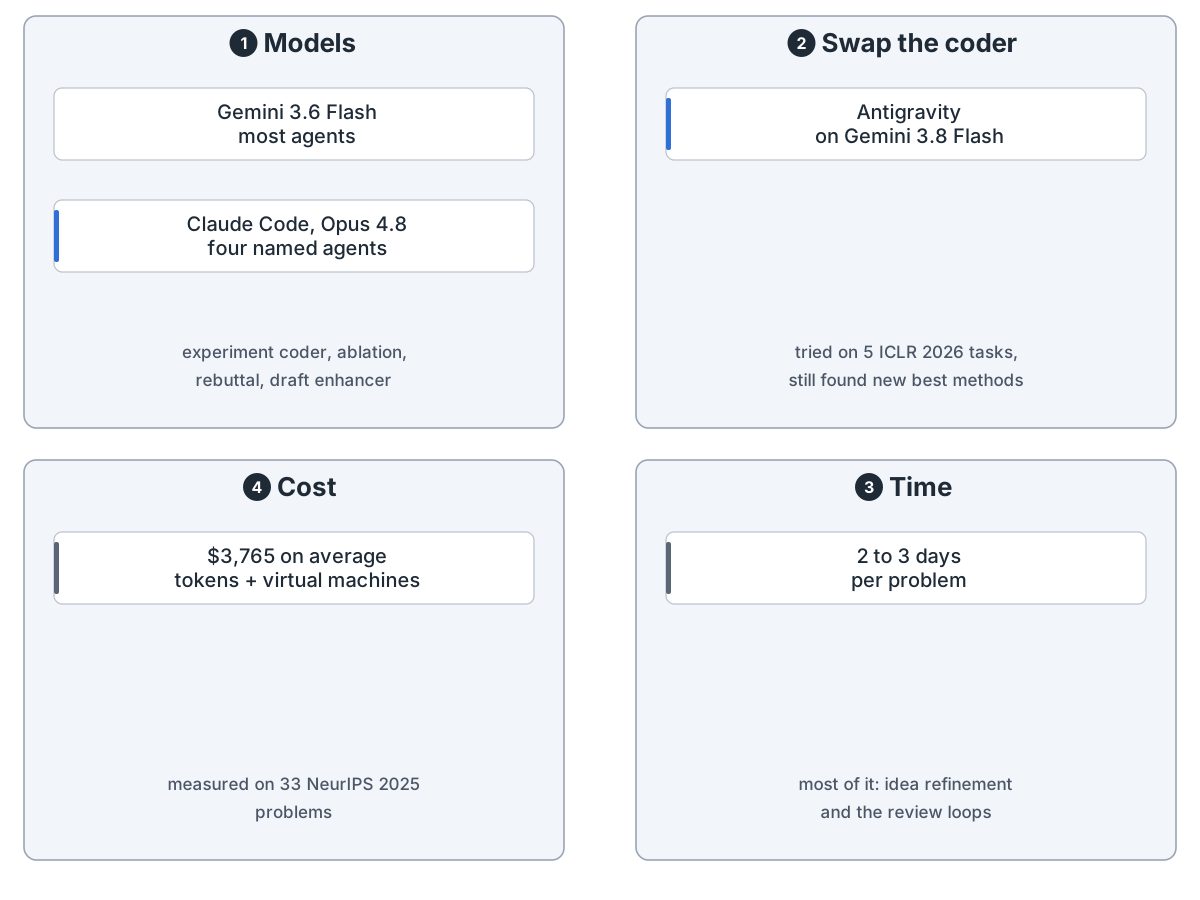
多数代理用 Gemini 3.6 Flash,四个(含实验编码)用 Claude Code 加 Opus 4.8。一个问题平均 2 到 3 天、3765 美元。
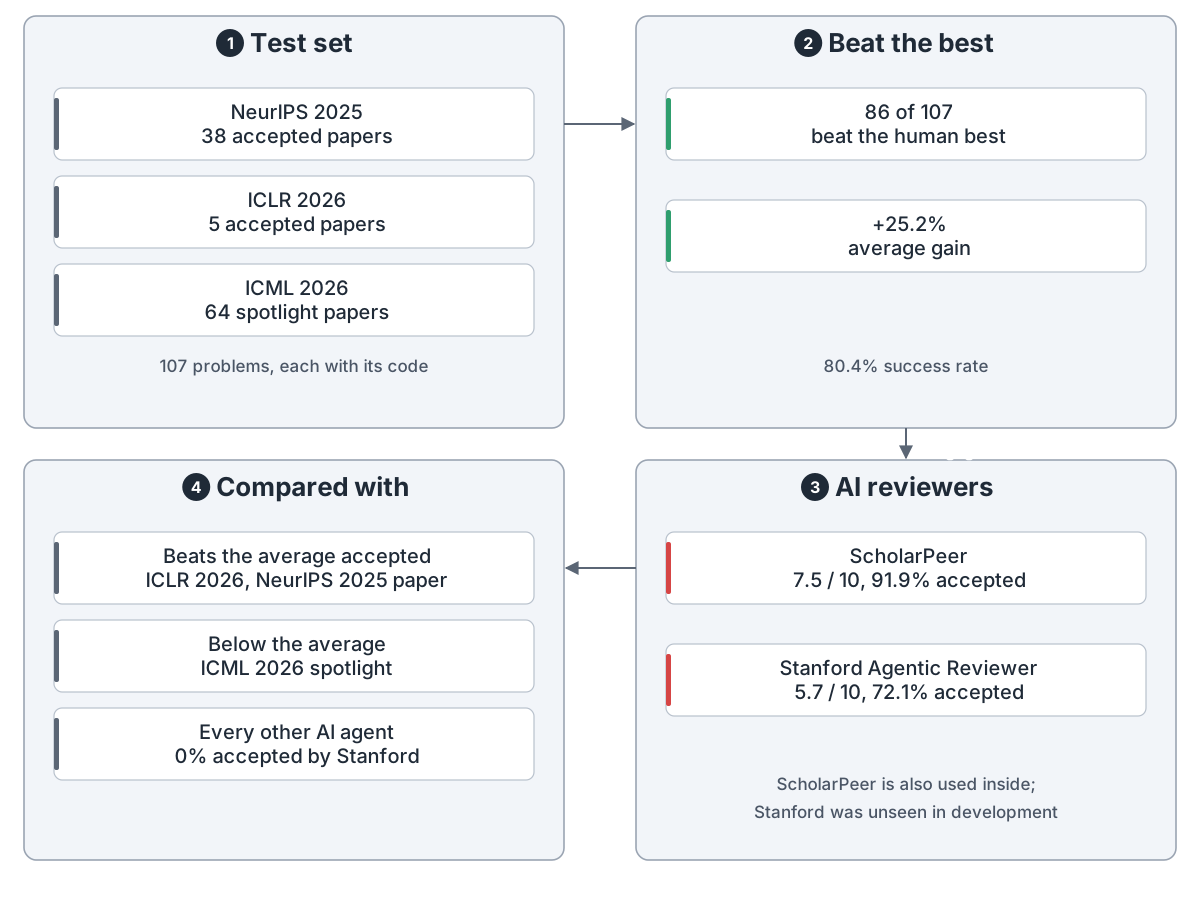
在 107 个取自 NeurIPS、ICLR、ICML 论文的问题上,86 个超过人类最好成绩,平均提升 25.2%。
ScientistTwo is a research agent from Google Cloud AI Research. You give it a research problem, plus the current best paper and its code. It comes up with ideas, runs experiments, writes the paper and reviews it, with no human in the loop.
Every stage works the same way. One agent makes something, and a critic accepts it, rejects it or asks for a fix. Each loop has a round limit.
1. Ideas. It lists what the best method gets wrong, writes ideas that fix it, and ranks them by novelty.
2. Experiments. Each idea runs on a small slice of the benchmark first. Only ideas that beat the baseline get the full benchmark.
Results from every idea feed an evolver that writes better ones. A selector picks the best.
3. Ablation. It removes parts one at a time to see which ones matter, and may revise the method once.
4–5. Writing and review. An AI reviewer scores the draft. Below 8 out of 10, a rebuttal agent runs new experiments and the draft is updated.
6. Meta-review. A last reviewer accepts the paper or sends the idea back for one more fix. If the fix doesn't beat the old results, it is dropped and the previous paper ships.
Four checks keep it honest: code that reruns, a filter for rule-breaking code, real citations, and a method section that matches the code.
Most agents run on Gemini 3.6 Flash. Four, including the experiment coder, use Claude Code with Opus 4.8. One problem takes 2 to 3 days and $3,765 on average.
On 107 problems taken from NeurIPS, ICLR and ICML papers, it beat the human best on 86, by 25.2% on average.
来源Source: scientist-two.github.io